How to Build a Hoop House (Simple DIY on Our Homestead)
Learn how to build a hoop house step-by-step using a simple kit, ground anchors, and a buried base. A practical guide for beginners and homesteaders.
This post may contain affiliate links. Which means I may make a small commission at no additional cost to you. For my full disclosure click here.
This year we finally added something I’ve been wanting for a long time…a hoop house.
It’s one of those projects that felt a little intimidating at first, but once we got started, it came together much faster than I expected.
We didn’t overcomplicate it. We used a simple kit, made a few adjustments for stability, and just worked through it step by step.
If you’ve been thinking about adding a hoop house to your garden or homestead, I want to show you exactly how we did ours.
The Hoop House Kit We Used
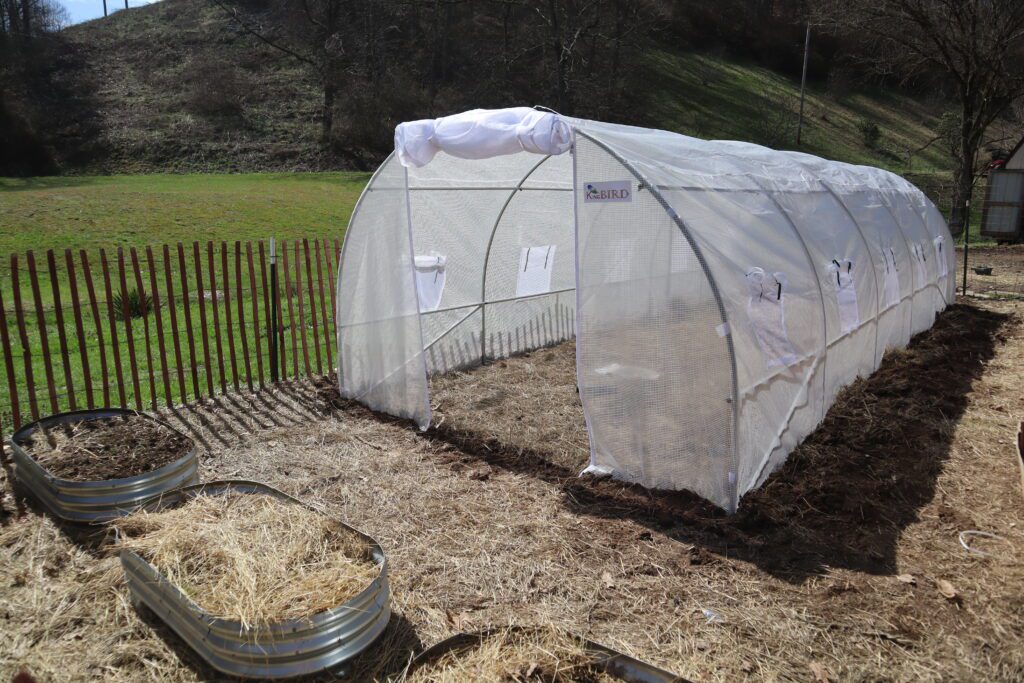
We used a pre-made hoop house kit with these dimensions:
- 25 ft long
- 10 ft wide
- metal frame with a plastic cover
We wanted something simple that didn’t require a full custom build, and this worked really well for that. This is the exact one we chose.
Choosing the Location
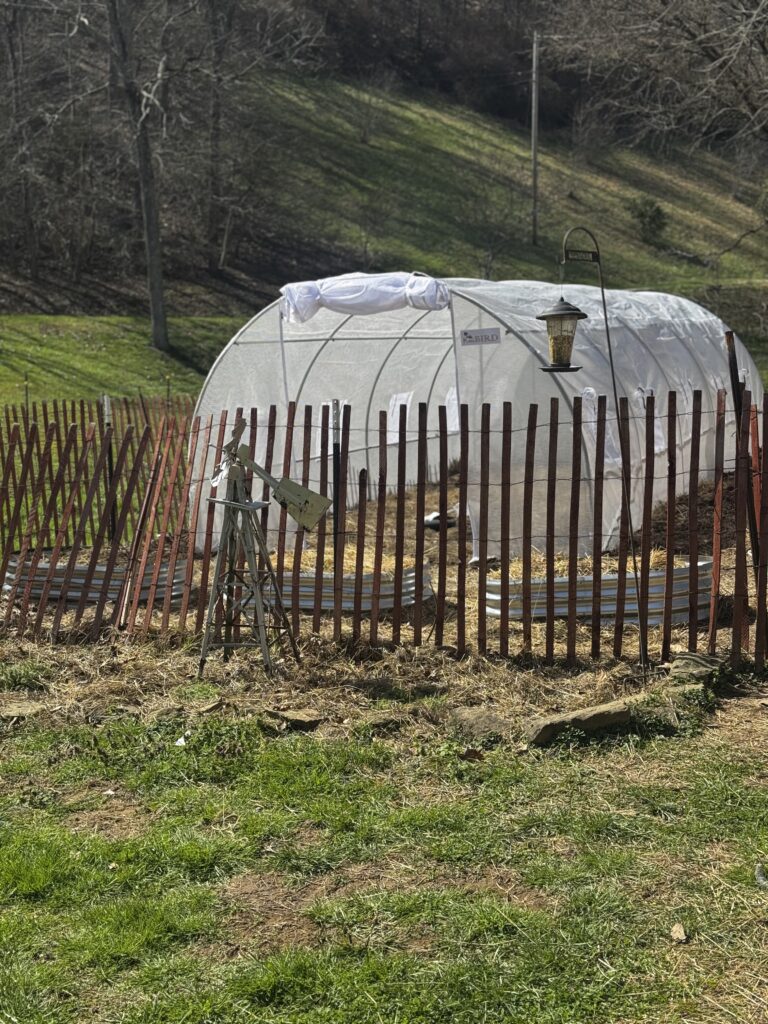
We placed our hoop house in our main garden area where it would:
- get good sunlight
- be easy to access daily
- fit naturally into our layout
We didn’t overthink this part too much, but having it close to where we already work made sense for us.
Digging a Trench for Stability
This is one of the biggest things we did differently than just setting it on top of the ground.
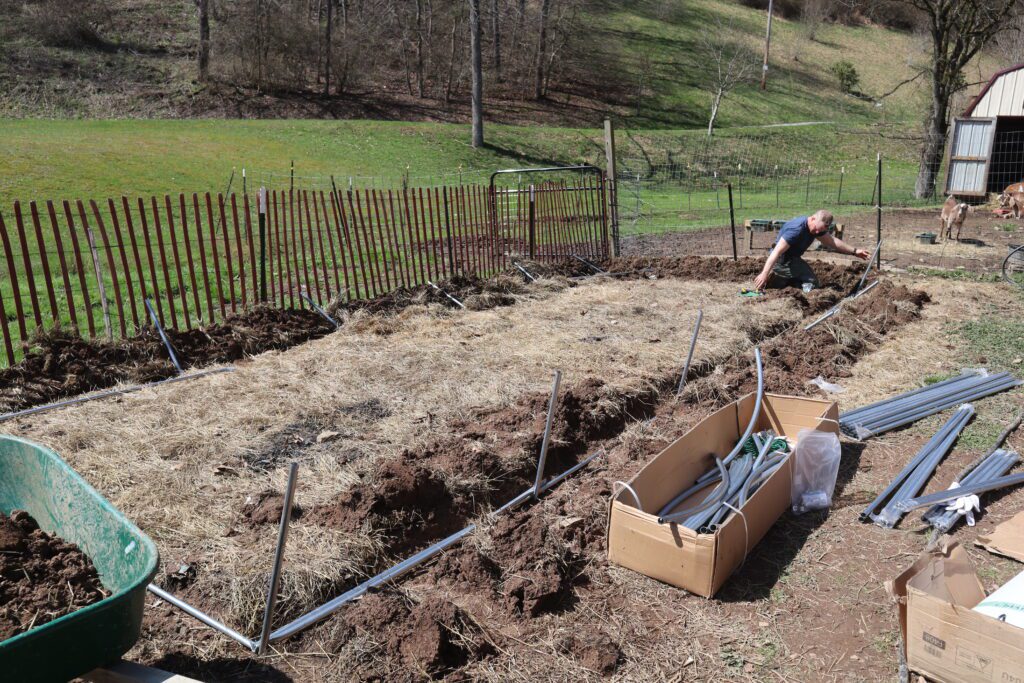
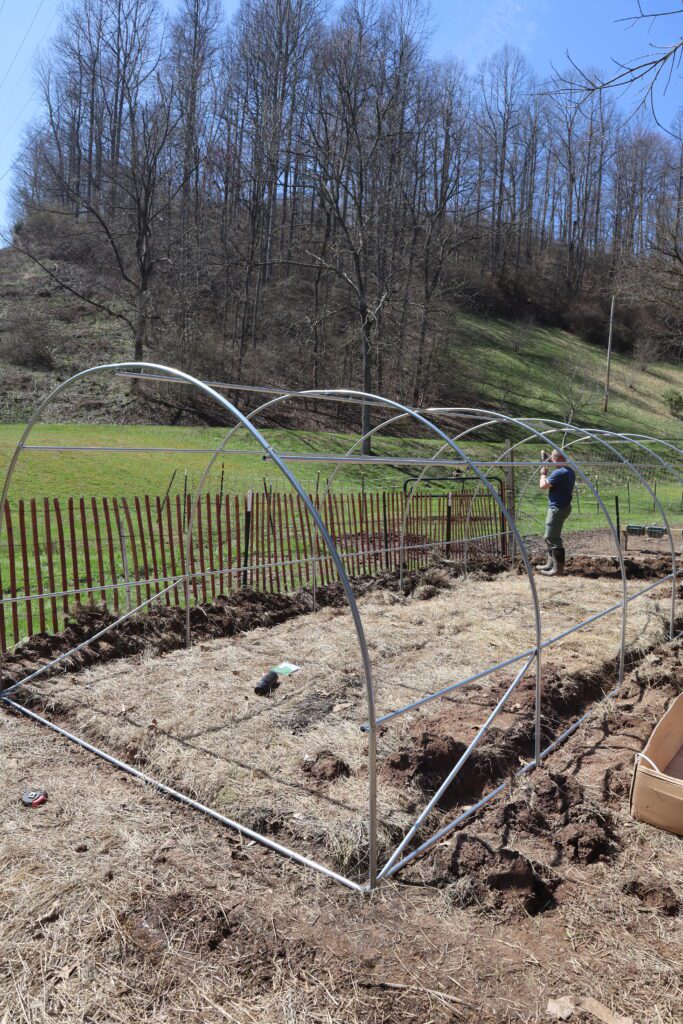
We dug about a 6-inch trench around the base of the hoop house.
This allowed us to:
- set the bottom rails slightly into the ground
- bury part of the plastic covering
- add extra stability to the whole structure
Once everything was in place, we backfilled the trench.
This made the hoop house feel much more solid and secure.
Securing the Frame to the Ground
We didn’t want this thing going anywhere in a storm, so we made sure it was anchored well.
We used:
- the ground anchors that came with the kit
- additional shepherd’s hook style rebar anchors
These were driven into the ground over the base poles to really hold everything in place.
This step gave us a lot more confidence in the structure.

Building the Frame
Once we had the trench dug and the base area prepped, we moved on to building the frame.
We followed the manufacturer’s instructions for this part. I’ll be honest, the directions weren’t the clearest, and it took a little bit to figure out what went where. The parts were labeled and numbered, but the English was iffy at best. 🙂
But once we got started and understood the pattern, it actually went together pretty quickly.
Within a couple of hours, we had the full frame assembled.
It was one of those projects where the beginning feels a little confusing, but once you get into a rhythm, it moves fast.
Attaching and Burying the Plastic Cover
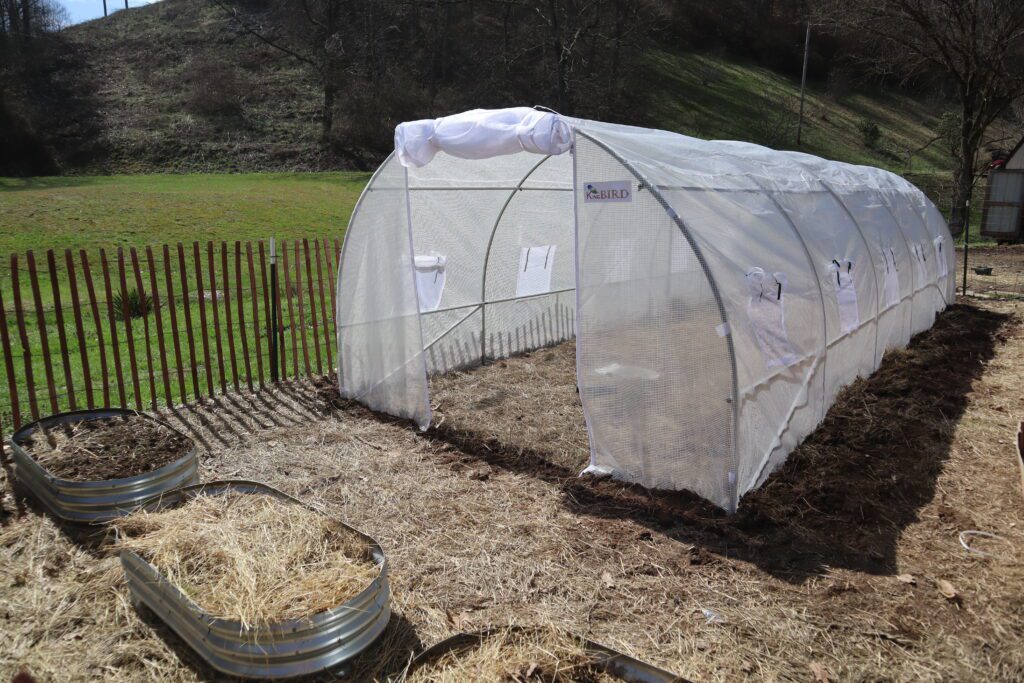
Once the frame was up, we added the plastic covering.
Because of the trench we dug earlier, we were able to:
- pull the plastic down
- bury about 6 inches of it along the bottom
- secure it in place with soil
This helps:
- keep the wind from getting underneath
- hold the cover tightly in place
- add even more stability
The Instructions Were Vague (But It Was Still Doable)
I’ll be honest — the instructions that came with the kit weren’t great.
They were a little vague and not always clear.
But once we figured out the general pattern of how everything connected, it actually went up pretty quickly.
It was one of those projects where:
👉 the beginning feels confusing
👉 but once it clicks, it moves fast
What I’d Do the Same (and What I’d Change)
I would absolutely:
- dig the trench again
- use extra anchors
- keep it simple with a kit
I might change:
I’d probably try to get the outer cover a little tighter when I buried the extra cover. The little wrinkles bother me just a tad, but overall, it looks fine and doesn’t shift with the wind. That’s the most important thing.
What We Plan to Grow Inside
This is the part I’m most excited about.
We’re planning to use the hoop house for:
- tomatoes
- peppers
- cucumbers
- and anything that needs a longer growing season
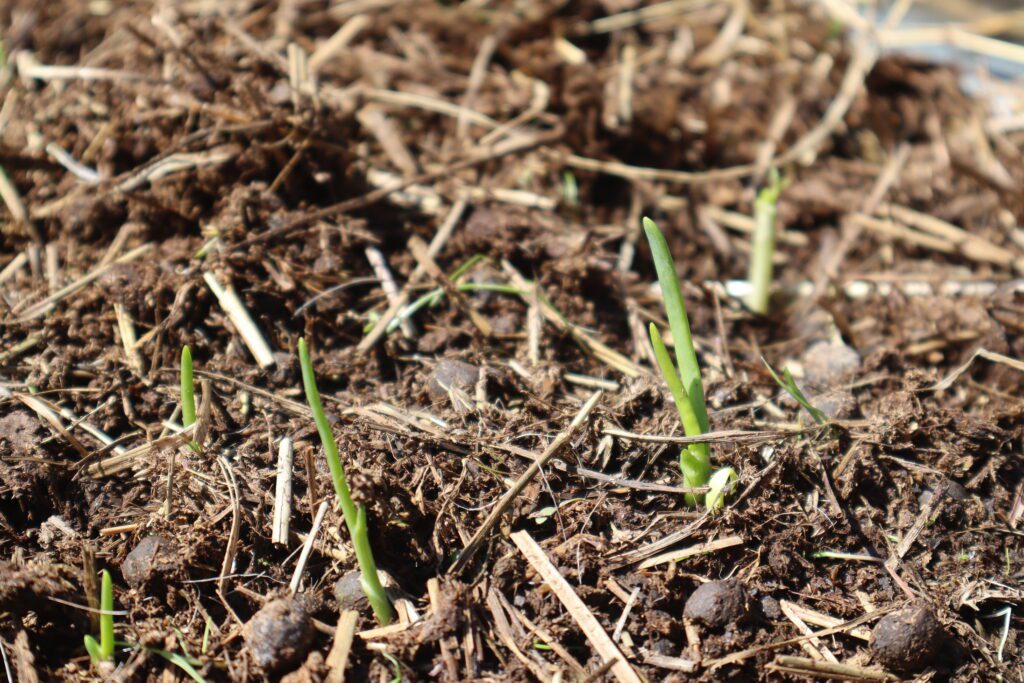
It should give us a lot more control and extend what we’re able to grow here.
How Much Will a Hoop House Extend the Growing Season?
One of the biggest reasons we wanted to add a hoop house was to extend our growing season here in zone 6a.
From what I’ve seen so far (and what others in similar climates share), a simple unheated hoop house like this can usually give you about 2-4 extra weeks in the spring and another 2-4 extra weeks in the fall.
That might not sound like much, but in real life, it makes a big difference.
It gives a little more flexibility when planting in the spring and a little more time before everything shuts down in the fall. Instead of feeling like you have one narrow window to get everything harvested, it gives a little bit of margin. W
We’ll see how it performs through the seasons, but even a few extra weeks feels like a big win.
Was It Worth It?
Yes.
This already feels like something that’s going to make a big difference for us.
It’s one of those projects that:
- adds function
- supports food production
- and fits right into everyday homestead life
If You’re Thinking About Building One
If you’ve been on the fence about adding a hoop house, my advice would be:
👉 don’t overthink it
👉 keep it simple
👉 just get started
You don’t need a perfect setup to make it worthwhile.
Related Posts
- How to Preserve Eggs with Water Glassing
- How to Start Living a From-Scratch Life
- From-Scratch Cooking Gets Easier Over Time