How to Roast a Whole Chicken, Even If It’s Frozen: 9 Simple Steps
Learn how to roast a whole chicken, even if it’s frozen, with this step-by-step guide. Perfect for a juicy, golden roasted whole chicken every time!

There’s something deeply satisfying about roasting a whole chicken. It feels like one of those old-fashioned homemaking skills that instantly brings warmth and comfort into your kitchen. Whether you’re planning a Sunday family meal or hoping to stretch one chicken into several simple meals throughout the week, roasting a whole chicken is an easy and economical way to feed your family well.
But what happens when you open the freezer and realize your chicken is still frozen solid?
Life happens. Maybe you meant to thaw it overnight in the fridge, but the day got away from you. Before you give up and start thinking about takeout, let me reassure you, you can roast a whole chicken straight from frozen, and it’s simpler than you might think.
In this guide, I’ll walk you through exactly how to roast a whole chicken, even if it’s frozen, so you can feel confident putting a wholesome meal on the table no matter how the day unfolds.
Can You Roast a Frozen Chicken?
Yes! You absolutely can roast a frozen chicken, and it’s safe to do so. The USDA confirms that cooking meat from frozen is safe, as long as you adjust the cooking time to make sure it reaches the right internal temperature (which for chicken is 165°F). The key is to allow for more time, as the chicken will obviously take longer to cook than one that’s been thawed.
While cooking a frozen chicken isn’t too different from cooking a thawed one, you’ll need to be a bit more patient—and I’ll give you a few tips to make sure it turns out golden, juicy, and delicious.
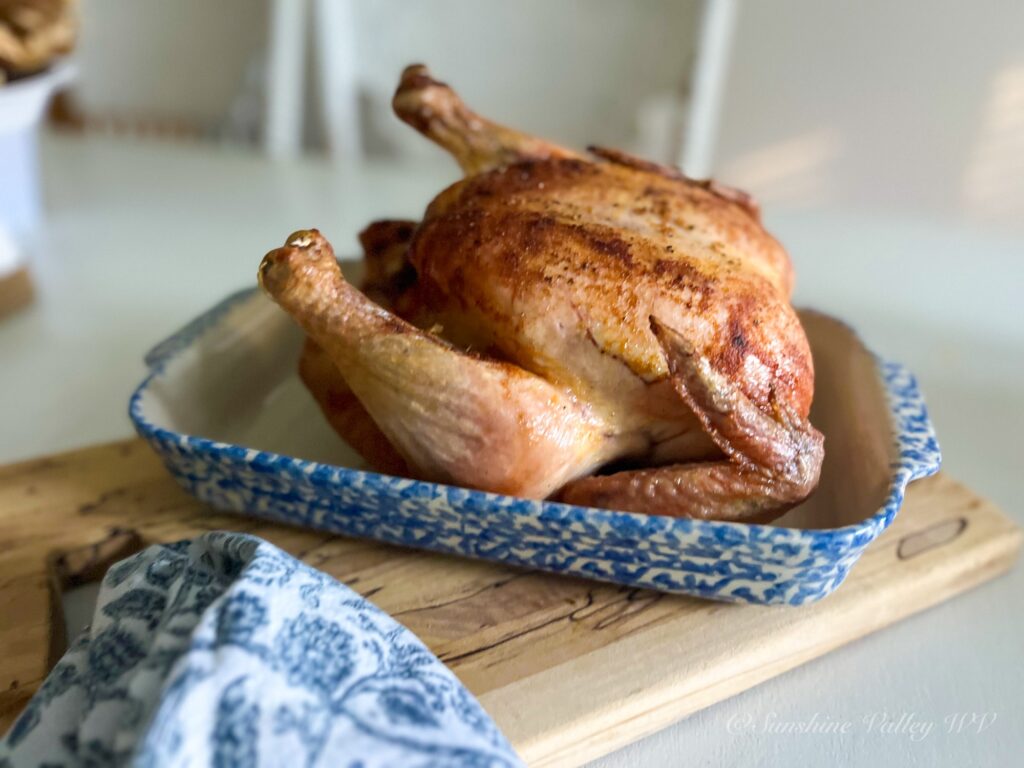
Step-by-Step Guide on How to Roast a Whole Chicken: Even if it’s Frozen
Here’s how to do it, step by step:
1. Preheat Your Oven
Start by preheating your oven to 350°F (175°C). Since you’ll be cooking the chicken longer, you want a lower temperature than you’d use for a thawed bird. This allows the chicken to cook evenly without drying out.
2. Prep Your Pan
Grab your roasting pan or a baking dish that’s large enough to hold the whole chicken. You can place a roasting rack in the pan if you have one, but if you don’t, no worries! Simply laying the chicken directly in the pan will work just fine.
3. Get the Chicken Ready
Take the frozen chicken out of its packaging. If the chicken is stuffed with giblets or a neck, you won’t be able to remove them until the bird has thawed a bit during the cooking process. That’s okay! You can remove them later.
Place the frozen chicken breast-side up in the roasting pan. You won’t be able to season the inside yet, but you can season the outside. Drizzle some olive oil or melted butter over the top, and sprinkle on a good amount of salt, pepper, and any other herbs or spices you enjoy. I love adding garlic powder, paprika, thyme, and rosemary for a classic roasted chicken flavor.
4. Roast the Chicken
Pop the chicken in the oven and let it roast. For a frozen chicken, you’ll need to add about 50% more cooking time than you would for a thawed bird. If your chicken is about 4 to 5 pounds, it will usually take around 2 to 3 hours to fully cook from frozen.
Here’s a simple rule of thumb:
• For a thawed chicken, you generally cook it for about 20 minutes per pound.
• For a frozen chicken, increase that to about 30 minutes per pound.
So, if you have a 5-pound frozen chicken, it’s going to take around 2.5 to 3 hours to roast.
5. Check the Chicken After About 1 Hour
After the first hour of cooking, your chicken will have thawed enough to work with a little more. At this point, you can try to remove any giblets or the neck from the cavity using tongs or a fork if you haven’t already.
If you want, you can now season the inside of the bird. You can also add a few cloves of garlic, lemon wedges, or fresh herbs like rosemary or thyme inside the cavity to boost flavor. Baste the chicken with its juices or a bit more butter or oil to help it brown beautifully.
6. Continue Roasting and Basting
Every 30 minutes or so, baste the chicken with its own juices to keep it moist. If you notice that the skin is browning too quickly, you can tent a piece of aluminum foil over the top to prevent it from burning.
7. Check for Doneness
After 2 to 3 hours, your chicken should be close to done. The best way to check is to use a meat thermometer. Insert it into the thickest part of the thigh (without touching the bone). The chicken is safe to eat when the internal temperature reaches 165°F.
If you don’t have a thermometer, you can also cut into the thigh and make sure the juices run clear (not pink). The leg should also move easily when you wiggle it, which is a good sign that the bird is done.
8. Let It Rest
Once the chicken is fully cooked, remove it from the oven and let it rest for about 10 to 15 minutes before carving. This allows the juices to redistribute, making the meat even more tender and juicy.
9. Carve and Enjoy!
Now, carve up your roasted chicken and enjoy! Serve it alongside some roasted vegetables, a salad, or maybe some warm, crusty bread.

Tips for a Perfect Roasted Whole Chicken
• Add Vegetables: If you want a complete meal in one pan, add some vegetables like carrots, potatoes, and onions around the chicken halfway through the cooking process. They’ll absorb the delicious chicken juices and roast to perfection.
• Crispy Skin Tip: If you love extra crispy skin, bump the oven temperature up to 400°F for the last 15 minutes of cooking. Just keep an eye on it to prevent burning.
• Leftovers: A roasted chicken is fantastic for leftovers. You can use it for sandwiches, salads, soups, or even make a delicious chicken broth with the bones!

Learning how to roast a whole chicken, even from frozen, is one of those simple kitchen skills that makes everyday life easier. It’s comforting, practical, and reliable, and it ensures you always have a wholesome meal option on hand, even when plans change.
The next time you find a frozen chicken and wonder what to do, remember, you’ve got this. Roast away, and enjoy the comfort of a homemade meal filling your home.
Happy roasting!


Roasted Chicken
Ingredients
- 1 Whole Chicken
- Seasonings of choice
Instructions
Preheat Your Oven
- Start by preheating your oven to 350°F (175°C). Since you’ll be cooking the chicken longer, you want a lower temperature than you’d use for a thawed bird. This allows the chicken to cook evenly without drying out.
Prep Your Pan
- Grab your roasting pan or a baking dish that’s large enough to hold the whole chicken. You can place a roasting rack in the pan if you have one, but if you don’t, no worries! Simply laying the chicken directly in the pan will work just fine.
Get the Chicken Ready
- Take the frozen chicken out of its packaging. If the chicken is stuffed with giblets or a neck, you won’t be able to remove them until the bird has thawed a bit during the cooking process. That’s okay! You can remove them later.
- Place the frozen chicken breast-side up in the roasting pan. You won’t be able to season the inside yet, but you can season the outside. Drizzle some olive oil or melted butter over the top, and sprinkle on a good amount of salt, pepper, and any other herbs or spices you enjoy. I love adding garlic powder, paprika, thyme, and rosemary for a classic roasted chicken flavor.
Roast the Chicken
- Pop the chicken in the oven and let it roast. For a frozen chicken, you’ll need to add about 50% more cooking time than you would for a thawed bird. If your chicken is about 4 to 5 pounds, it will usually take around 2 to 3 hours to fully cook from frozen.
- Here’s a simple rule of thumb:
- For a thawed chicken, you generally cook it for about 20 minutes per pound.
- For a frozen chicken, increase that to about 30 minutes per pound.
- So, if you have a 5-pound frozen chicken, it’s going to take around 2.5 to 3 hours to roast.
Check the Chicken After About 1 Hour
- After the first hour of cooking, your chicken will have thawed enough to work with a little more. At this point, you can try to remove any giblets or the neck from the cavity using tongs or a fork if you haven’t already.
- If you want, you can now season the inside of the bird. You can also add a few cloves of garlic, lemon wedges, or fresh herbs like rosemary or thyme inside the cavity to boost flavor. Baste the chicken with its juices or a bit more butter or oil to help it brown beautifully.
Continue Roasting and Basting
- Every 30 minutes or so, baste the chicken with its own juices to keep it moist. If you notice that the skin is browning too quickly, you can tent a piece of aluminum foil over the top to prevent it from burning.
Check for Doneness
- After 2 to 3 hours, your chicken should be close to done. The best way to check is to use a meat thermometer. Insert it into the thickest part of the thigh (without touching the bone). The chicken is safe to eat when the internal temperature reaches 165°F.
- If you don’t have a thermometer, you can also cut into the thigh and make sure the juices run clear (not pink). The leg should also move easily when you wiggle it, which is a good sign that the bird is done.
Let It Rest
- Once the chicken is fully cooked, remove it from the oven and let it rest for about 10 to 15 minutes before carving. This allows the juices to redistribute, making the meat even more tender and juicy.
Carve and Enjoy!
- Now, carve up your roasted chicken and enjoy! Serve it alongside some roasted vegetables, a salad, or maybe some warm, crusty bread.